The materials we were reading yesterday (particularly Steve Silva’s “History: Fire and Blood(worth),” got us to thinking. There, Steve wrote about the  September 2, 1666 London fire which destroyed 80% of the city, the government’s emergency powers, and compensation. He also brought up a subject we had not know of before: the subsequent legislation — the Fire of London Disputes Act  1666 (18 & 19 C. II. c.7)* — which created the “Fire Court.”

That court — comprised of learned judges from existing courts (K.B., Common Pleas, and Exchequer) — was created to resolve “Differences touching Houses burned or demolished by reason of the late Fire which happened in London” between landlords and tenants. The court began its seating on January 1, 1668. The legislation charged the court with resolving disputes about the required rebuilding, property boundaries, the “Rents as if the same had not been burned,” and
Continue Reading Time For A “Coronavirus Disputes Court?”

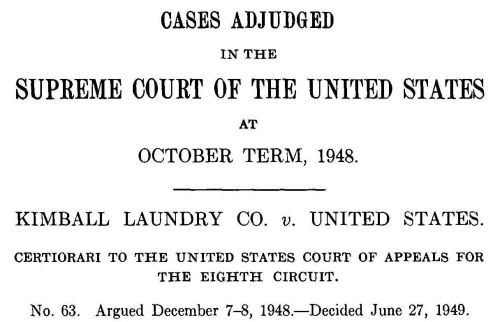
Kimball_page

It’s tough with all that’s swirling around all of us to keep focused on non-virus related things. But because we think that’s one way to keep calm and carry on, we shall continue to endeavor to do so. But come on, being takings and dirt lawyers we also can’t help viewing current events through that lens, no? Consequently, we shall also continue from time-to-time to post about issues that have cropped up in practice that are related to the thing that is on everyone’s mind these days.

In that vein, here’s the latest on-topic things we’ve been reading: 

  • History: Fire and Blood(worth) – Steve Silva, Taking Nevada blog (“Many argue, with great merit, that when a person’s property is sacrificed to preserve the public health, that the person is entitled to compensation. But the law has not yet reached that conclusion, … [and] there is no legal mandate


Continue Reading Latest Readings: On Emergency Takings, Compensation For Commandeered Property

As long-time readers know, we often kvetch about the way many courts ignore the Palazzolo rule that simply because someone obtains property subject to preexisting restrictions on use does not preclude them automatically from raising takings claims. See here, here, here, and here, for example. More about the Palazzolo case here, including video.

But not all courts get it wrong, however. Now you can add to the plus-column the Florida District Court of Appeal (Second District)’s decision in Jamieson v. Town of Fort Myers Beach, No. 2D19-238 (Mar. 25, 2020).

The court held that a property owner who purchased land that earlier had been designated as 100% “wetlands” on the Town’s land use map was not prohibited from pursuing takings (and since this is Florida, Bert Harris Act) claims. The case is a two-fer, because the court also concluded that the claims were ripe

Continue Reading Talkin’ ‘Bout My Palazzolo: Takings Claim Not Precluded Because Owner Purchased Land Already Subject To Wetlands Regs

Front page

Here’s one for our Hawaii folks, in case you all are curious about the origins of the analytical framework which courts use to review the legality of measures taken by the authorities in the name of “public health” that have an impact on the uses of private property.  

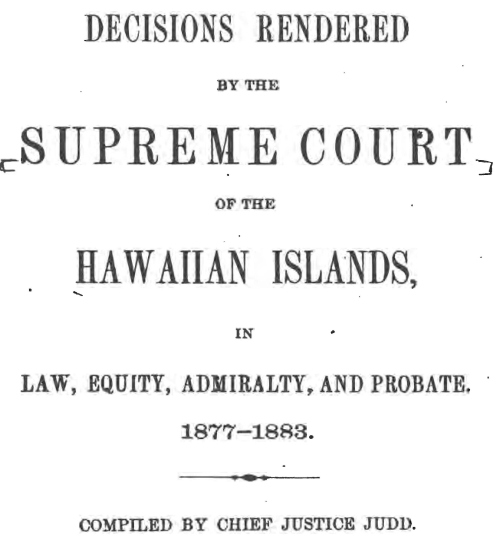
As far as we can tell, The King v Tong Lee, 4 Haw. 335 (Kingdom 1880) (in banco), is the first Hawaii case which uses the term “police power,” and which upheld the broad – and nearly unreviewable – authority of the government to limit the uses of property, as long as there’s a colorable argument that the property’s use is contrary to the public health.

There, the Kingdom’s legislature (one of the joys of practicing law in Hawaii is that you get to deal with cases involving the Kingdom; things like Privy Council, the royal prerogative, and the like) prohibited

Continue Reading The Royal Origins Of “Police Power” Hawaii-Style: The King v. Tong Lee (1880)

Here’s the cert petition we’ve been eagerly awaiting in a case we’ve been following about Seattle’s rewriting of the traditional lessor-lessee relationship.

The petition arose out of facial takings and due process challenges to Seattle’s “first in time” rule for residential leasing. The city adopted an ordinance requiring owners to rent to the first tenant who applies that meets the owner’s screening criteria.

The Washington Supreme Court tossed aside a long line of its own cases which held that the Washington Constitution’s takings clause is not interpreted by the same analysis the U.S. Supreme Court employs for the Fifth Amendment. Not so the Washington court held, we might in the future decide that the Washington Takings Clause provides greater protection, but for the time being we conclude that federal takings doctrine is so clear that we simply adopt it wholesale. (The court based this conclusion on Tahoe-Sierra. Really! Of

Continue Reading New Cert Petition: Seattle’s “First In Time” Tenant Rule Is A Taking And Due Processey

This just in. In Pakdel v. City and County of San Francisco, No. 17-17504 (Mar. 17, 2020), a three-judge panel of the U.S. Court of Appeals for the Ninth Circuit affirmed the dismissal of a regulatory takings claim which the District Court threw out for not being ripe under Williamson County‘s “state procedures” requirement.

Wait, you say, didn’t the Supreme Court toss that requirement out in Knick? Yes, but it also did not disturb the separate requirement that the government charged with a taking have made the final decision applying the regulations to the property which is claimed to have been taken.

The panel thus affirmed on other grounds because the plaintiffs had not obtained an exemption from the regulation. Yes, this is the “variance” argument.  

We’re reading the opinion in more detail, but wanted to push it out quickly so that others weigh in. We’ll have

Continue Reading Williamson County’s “Final Decision” Rule Lives! CA9: You Still Need To Ask The Govt For An Exemption To The Rules

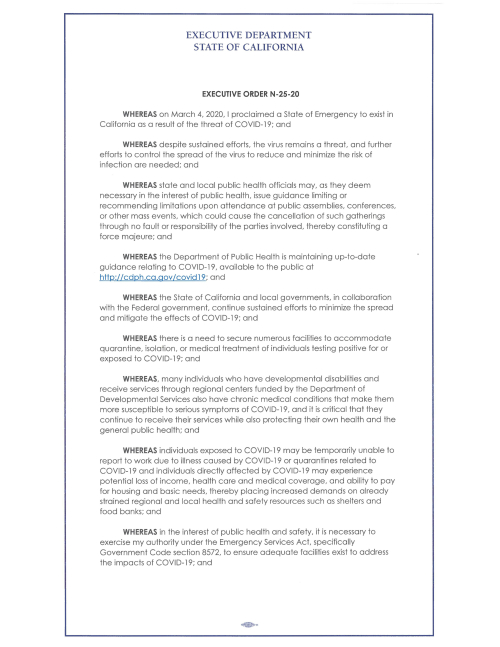
Cal Emergency EO

You remember the TV trope where Starsky, Hutch, or some other police officer is in hot pursuit of a dangerous criminal and flags down a motorist and “commandeers” their private vehicle and drives off?

We thought of that when we were reading the news reports about various governments invoking their emergency powers to respond to the coronavirus crisis. 

So while we were on the telephone on hold (bailing out of every conference, event, and travel arrangement in the foreseeable future), we thought we would take a look at the recent Executive Order, issued by California Governor Gavin Newsom, which expressly mentioned the “power to commandeer [private] property” such as hotels and medical facilities and press them into public service, as needed:

The California Health and Human Services Agency and the Office of Emergency Services shall identify, and shall otherwise be prepared to make available-including through the execution of any

Continue Reading #CoronavirusLaw: Is There A Difference Between “Commandeering” Property In An Emergency, And “Taking” It?

Here’s the latest in a case we’ve been following that involves a local government prohibiting, via a zoning ordinance, the mining of silica (used as “frac sand”). Kind of like how Pennsylvania barred certain coal mining in our old friend, Pennsylvania Coal Co. v. Mahon, 260 U.S. 393 (1922). 

In Minnesota (where our story takes place) the right to subsurface minerals is separate from the rest of the land. Kind of like how Pennsylvania law recognized subsurface rights as a separate “stick” in Mahon. Here, the plaintiff owned several leases which allow it to mine silica. Sounds like a property interest, no? 

Well, no. At least not to a majority of the Minnesota Supreme Court, which held in Minnesota Sands, LLC v. County of Winona, No. A18-0090 (Mar. 11, 2020) (affirming the court of appeals) that the right to mine silica was a property right, but

Continue Reading Pennsylvania Coal Revisited: Outlawing Silica Mining Isn’t A Taking, Even Though Mining Rights Are “Property” Under State Law

EX A

Here’s the cert petition that we’ve been eagerly waiting to drop in a case we’ve been following (and which gathered a lot of public — and academic — attention and outrage). 

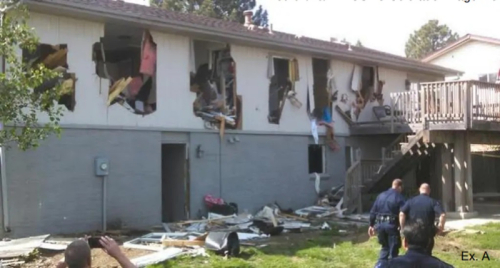
Yes, this is the case where the Village police pretty much destroyed a family home in the course of their efforts to dislodge a shoplifter who had taken refuge there while fleeing. Homeowner sought compensation for a taking. The Tenth Circuit, however, concluded “no taking” because the police were exercising the police power. And you can’t have a taking where the government is exercising the police power.

We were not terribly surprised by the ruling as grossly unfair as it is, because it is pretty typical: customs agents inspect and seize your laptop at the border to check it out but destroy the data on the hard drive? no taking; DEA holds your legal prescription drugs as evidence against

Continue Reading New IJ Cert Petition: Purposely Destroying Your House Could Be A Taking, Even If Govt Was Exercising Its Police Power

Complaint front page

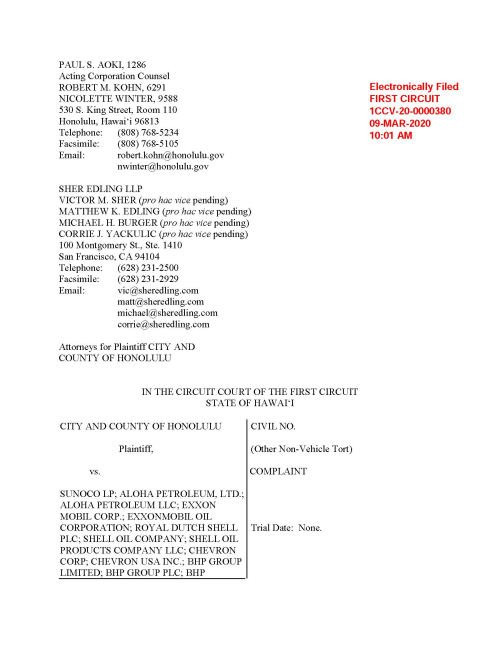
Make what you will of this 205-paragraph, 114 page (including 128 footnotes) Complaint, filed yesterday by the Acting Corporation Counsel for the City and County of Honolulu and a battery of outside lawyers against gasoline producers, alleging that they are responsible to pay the costs of sea-level rise and other symptoms of what the complaint calls the “climate crisis.”  

It’s a challenging read, but the fun part is in the claims for relief (fast forward to page 99), which include (for you property mavens) nuisance, private nuisance, and trespass (by flooding), as well as affirmative and negligent failure to warn of the dangers of fossil fuel products. 

Will this lawsuit go anywhere? Is a big municipal payday in the cards? Will it get to a local jury? Your guess is as good as ours. But we’ll be following along, for sure.  

Complaint, City and County of Honolulu v. Sunoco

Continue Reading Complaint: Honolulu Sues Gas Companies (For Nuisance) To Recover The Cost Of Sea-Level Rise