A quick check of the Supreme Court’s docket in the Knick v. Township of Scott case shows that no less than 18 amici briefs have been filed top side. Not all of them in support of the Petitioner mind you (two, the briefs of the United States and of the American Planning Association, are in support of neither party, or ask the Court to impose a specific remedy), but whoa, that’s still a lot. 

Shows us how much a case about a very technical aspect of takings law can generate huge participation, reflecting how important the issue of whether a property owner can file a federal takings claim in federal court truly is. 

So you don’t have to read each one (although we encourage you to do so), here’s our quick summary of each: 


Continue Reading Takings Ripeness Of Apparent Interest: Eighteen—18!—Amicus Briefs In Knick. Here’s Your Rundown.

You have about a week to reserve your tickets for the exclusive Honolulu screening of Little Pink House,” the feature film about the Kelo v. City of New London case,  scheduled for June 11, 2018:

Two key dates:

  • June 4, 2018: This is the deadline to buy your ticket. The way this works is that if a critical mass of tickets are presold, the screening is a go. If for some reason not enough tickets are sold by June 4, you get a refund. No lose. So buy your ticket here, right now.
  • June 11, 2018: The date of the screening. It will start at 6:30pm, at the Consolidated Theatres Kahala 8 (convenient, plus plenty of parking). Easy. 

We’ve seen the film. It is a compelling piece, and very accurate to the real story (with a few concessions to the art form, of course).

If you know

Continue Reading Tickets For Honolulu Screening Of “Little Pink House” Still Available

IMG_20180322_100645

Here’s some of the things we’re reading or reviewing today, focused on the legal scholars and takings (with the last one being of general interest):

  • Michael Pollack, Taking Data, 86 U. Chi. L. Rev. ___ (2018) (“This Article proposes a new approach to regulating government investigations of data that has been shared with ISPs — one that is inspired by a legal tool that is designed to achieve the very balance between public benefits and private burdens that has thus far proven elusive. This tool is the Takings Clause.”). 
  • Meron Werkneh, Retaking Mecca: Healing Harlem through Restorative Just Compensation, 51 Colum. J. L. & Soc. Probs, 225 (2018) (just compensation does not account for “the loss of the community as a unit, or the dignitary harm suffered due to forcible displacements in the name of ‘revitalization.'”). 
  • Katrina M. Wyman, Limiting the National Right to Exclude, 72 U.


Continue Reading Thursday Reading, Law Review Edition

You might not think that the conclusion which the U.S. Court of Appeals for the Tenth Circuit reached in M.A.K. Investment Group, LLC v. City of Glendale, No. 16-1492 (May 14, 2018) would be all that controversial: when private property is declared by a municipality to be “blighted” and subject to redevelopment (and eminent domain), the municipality needs to tell the owner about it, even if the taking may occur somewhere down the road. But apparently it was not obvious, for it took years of litigation to figure it out.

Colorado’s urban renewal statute permits local governments to designate private property as blighted (by looking at eleven factors), take it any time within the next seven years, and transfer the land to a new private owner. An owner has a very short time window — 30 days — to challenge the blight determination by filing a lawsuit in a Colorado

Continue Reading 10th Cir: When City Declares Property Blighted And Subject To Condemnation, It Must Tell The Property Owner

Little Pink House, the feature film about the Kelo v. City of New London case is in general release, and is now scheduled for a special screening in Honolulu in June.

Mark two dates on your calendar:

  • June 4, 2018: This is the deadline to buy your ticket. The way this works is that if a critical mass of tickets are presold, the screening is a go. If for some reason not enough tickets are sold by June 4, you get a refund. No lose. So buy your ticket here, right now.
  • June 11, 2018: The date of the screening. It will start at 6:30pm, at the Consolidated Theatres Kahala 8 (convenient, plus plenty of parking). Easy. 

We’ve seen the film (full review coming soon). It is a compelling piece, and very accurate to the real story (with a few concessions to the art form, of course).

If

Continue Reading Coming Attraction: Little Pink House (Honolulu, June 11, 2018, 6:30pm)

A water district, with regulatory approvals and permits from the California Department of Health Services, added chemicals — “secondary disinfectants” — to the tap water system to make the water safe to drink. The water complied with all federal and California drinking standards. 

Sounds good. No one wants undrinkable drinking water. Problem was these additives caused copper pipes in private homes to corrode.

The owners brought class actions under both nuisance (tort) and inverse condemnation theories. The Superior Court concluded the claims were preempted by both federal and state law. 

In Williams v. Moulton Niguel Water District, No. G053002 (May 3, 2018), the California Court of Appeal affirmed, although for different reasons. 

The nuisance claim was out because the District is immune from nuisance liability. Under California Civil Code section 3482, “[n]othing which is done or maintained under the express authority of a statue can be deemed a nuisance.” The

Continue Reading More Tort vs Taking: No Inverse Condemnation When Water District Added Chemicals Which Damaged Copper Pipes

20180504_091644_HDR
Surge pricing applies!

You really have to feel for taxi operators who invested what could be huge amounts of money to obtain a taxi medallion getting whacked by the competition from ridesharing outfits like Lyft and Uber. These services look and feel an awful lot like taxis, don’t they? As we wrote in a recent article:

These services—at least from the consumer’s standpoint—operate a heck of a lot like taxis do. You hail a ride (not with your arm and a sharp whistle, but with your fingers and your smartphone), you get in, you go, you get where you are going, you pay the driver (again, with the app, not by handing the driver cash or your credit card). Is that enough of a difference to say that ridesharing isn’t taxicabbing? On that, I am mostly with the taxicab operators. Having used Uber and Lyft more than a few

Continue Reading New York City Allowing Ridesharing Isn’t A Taking Of Taxi Medallions

Here’s what we’re reading today:


Continue Reading Monday Readings: South Africa Takings, Redevelopment, Metes and Bounds, And More

18730910_303

Here’s the not unexpected decision from the U.S. Court of Appeals for the Ninth Circuit in a case we’ve been following (sort of). It should never have gotten this far, even as the “plaintiffs” raise the specter of a cert petition.

We say again: the federal courts seem to have time for this brand of nonsense, but when it comes to land use and takings cases, they won’t be “super zoning boards of appeals,” and almost always refuse to give them the time of day. At least PETA didn’t make a takings claim and further hose up the law. 

Once again, Dr. Zaius could not be reached for comment.

Rock on, Naruto.

Naruto v. Slater, No. 16-15469 (9th Cir. Apr. 23, 2018)

Continue Reading 9th Cir: “Ape Shall Not Sue Ape!” Court Has Time For Silly Monkey Selfie Case, But Not For Takings

IMG_2947
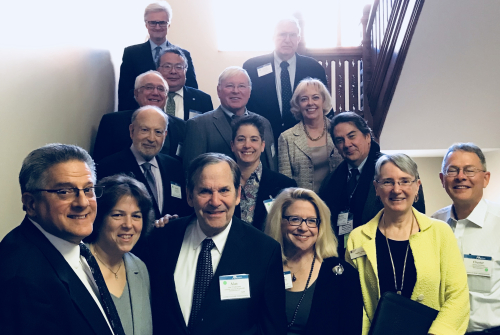
Some of the Land Use Institute faculty, including (front row left), Planning Chair Frank Schnidman and Planning Co-Chair Patty Salkin

Last Friday at the 32nd Annual Land Use Institute in Detroit, I was honored to moderate a freewheeling discussion by a panel of takings experts, Professor Steven Eagle, Minnesota lawyer Howard Roston, and Michigan’s own Alan Ackerman on “Takings, Eminent Domain, and Vested Rights.”

Here are the cases and other materials we discussed, as well as a few others which we did not have time to cover (but wish we could have):


Continue Reading Cases And Materials From The Takings And Eminent Domain Session At The Land Use Institute