Professor Richard Epstein shares his insight about the U.S. Supreme Court’s recent 8-1 decision in Marvin M. Brandt Revocable Trust v. United States, No. 12-1173 (Mar. 10, 2014).

The issue in the case was whether the federal government retained an “implied reversionary interest” when it issued railroad patents to private landowners, or whether these grants were subject only to a railroad easement. The Court concluded they were easements, which means that they were extinguished when the railroad ceased using them as railroads. 

Professor Epstein joined an amicus brief filed in support of the property owners in the case, which argued that a contrary ruling would violate “the special need for certainty and predictability where land titles are concerned.” 

Listen to the podcast here. Or go to this page and follow the link from there. 


Continue Reading Professor Epstein On SCOTUS Rails-To-Trails Decision
Our friend Paul Schwind has been keeping us up to date on the progress, vel non, of the legal challenge to the Honolulu rail project in the United States District Court for the District of Hawaii. We last reported on the status of this litigation on February 18, 2014, when the Ninth Circuit issued its opinion dismissing plaintiffs’ appeal of the judgment and partial injunction in Honolulutraffic.com v. Federal Transit Administration, No. 11-0307 (D. Haw. Dec. 27, 2012).

To our mild surprise, the Ninth Circuit concluded it had appelalte jurisdiction, even though there was a colorable argument that the judgment and partial injunction entered by the District Court was not an appealable order, since at the time of the appeal (May 2013) and oral argument (August 2013), the defendants still had not yet reported their compliance with the judgment, the plaintiffs had not, as a consequence, had time to

Continue Reading Guest Post: District Court’s Rail Compliance Order in Honolulu Rail Case – A Slam Dunk

Here are some reports and commentary on the Supreme Court’s opinion in Marvin M. Brandt Revocable Trust v. United States, No. 12-1173 (Mar. 10, 2014).

Continue Reading Brandt Round-Up

As we predicted it would after oral argument, today the U.S. Supreme Court ruled in the property owner’s favor in Marvin M. Brandt Revocable Trust v. United States, No.12-1173 (Mar. 10, 2014). Chief Justice Roberts wrote for the entire Court less Justice Sotomayor, who filed a solo dissent. SCOUTSblog posts a summary of the opinon here (“Victory – and money – for landowners“). 

As you might recall, the issue in the case was whether the federal government retained an “implied reversionary interest” when it issued these patents, or whether these grants were subject only to a railroad easement. The difference is that easements may be extinguished, while reversionary interests cannot. In this case, the railway abandoned its use, after which the federal government instituted a quiet title action in federal court asserting it owned the right of way, and that it did not revert to the property

Continue Reading SCOTUS Benchslap: Railroad Right Of Way Is An Easement, Just Like We Said A Long Time Ago

Ninth_circuit

Update 2/19/14: the Honolulu Star-Advertiser has this report (“The appellate court decision was an ‘overwhelming victory for the city from an ideologically diverse panel, said Robert Thomas, a Hono­lulu-and San Francisco-based attorney who attended the hearing in August. The panel comprised Judges Stephen Rein­hardt, Mary Schroe­der and Andrew Hur­witz. ‘All three of them agreed. They made pretty short work of the challengers’ arguments on the merits’ while spending much of the decision on the panel’s jurisdiction concerns, Thomas said.”). The Star-Advertiser also reported that the one issue remaining before the District Court was also (coincidentially) resolved yesterday against the challengers. Here is the court’s order (we will have a report on that issue shortly). 

++++++++++++++++++++++++++++

Okay, we’ve got the obligatory “rail” pun out of the way with the title. On to the opinion, which we posted earlier today, which we’ve now had a chance to review it in more

Continue Reading 9th Cir: Honolulu Rail Project On Track

Update: a deeper review of the opinion here.

The Ninth Circuit has affirmed the District Court’s decision upholding for the most part the environmental review of the Honolulu rail project. Here’s the summary from the court: 

The panel affirmed the district court’s dismissal of plaintiffs’ claims under the National Environmental Policy Act and Section 4(f) of the Department of Transportation Act arising from litigation challenging the construction of a highspeed rail project in Honolulu, Hawaii.

The panel held that it had appellate jurisdiction under either 28 U.S.C. § 1292(a)(1), as an appeal from the grant or refusal of injunctive relief, or 28 U.S.C. § 1291, as an appeal of a final judgment. The panel also held that the Environmental Impact Statement’s identification of the project objectives, and analysis of alternatives, satisfied the National Environmental Policy Act’s requirements. The panel further held the defendants did not violate Section 4(f) of the Department of Transportation Act where the defendants did not adopt a Managed

Continue Reading 9th Cir OK’s Environmental Review Of Honolulu Rail Project

Hey, that rhymes! Today, in a not-entirely-unexpected move, the U.S. Supreme Court granted cert and agreed to review United States v. Brandt Revocable Trust, No. 09-8047 (Fed. Cir. Sep. 11, 2012).

We say not-unexpected for two reasons. First, the Tenth Circuit expressly noted its ruling created a circuit split (that’s catnip to counsel considering a petition). Second, the Solicitor General did not oppose the petitition, but agreed that it should be granted to resolve the split in the government’s favor. 

The issue in the case is whether the federal government retained an “implied reversionary interest” when it issued these patents, or whether these grants were subject only to a railroad easement. The difference is that easements may be extinguished, while reversionary interests cannot. In this case, the railway abandoned its use, after which the federal government instituted a quiet title action in federal court asserting it owned the

Continue Reading Cert Grant In Brandt

The federal government has filed its brief responding to the cert petition which asks the Supreme Court to review a Tenth Circuit decision and resolve a lower court split about the meaning of the term railroad “right of way” as used in an 1875 federal statute and federal land patents subject to the 1875 Act.

The issue is whether the federal government retained an “implied reversionary interest” when it issued these patents, or whether these grants were subject only to a railroad easement. The difference is that easements may be extinguished, while reversionary interests cannot. In this case, the railway abandoned its use, after which the federal government instituted a quiet title action in federal court asserting it owned the right of way, and that it did not revert to the property owner.

Disclosure: we filed an amicus brief in the case supporting the petition. Our brief argues that the

Continue Reading SG’s Brief Not-In-Opposition In Railbanking Case: Court Should Resolve Circuit Split

13.EMDHI

Here are links to the cases and other materials (and more) we spoke about at today’s conference on Eminent Domain and Condemnation in Hawaii:


Continue Reading Materials From Today’s Eminent Domain In Hawaii Conference

Update: More here from the Star-Advertiser.

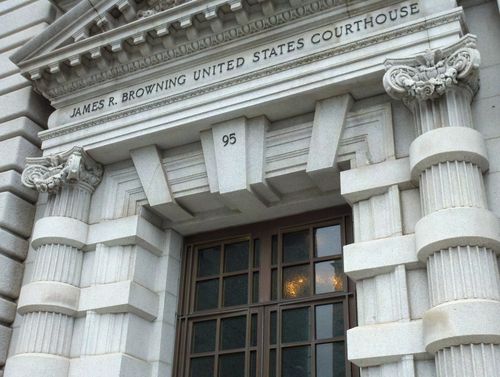
Courts, as “temples of justice” can be intimidating places, especially for the advocates who appear there. And when you make it a federal court, the level goes up. And when you are in a storied courthouse such as the Ninth Circuit’s headquarters in San Francisco surrounded by corinthian columns, cherub statues, and a ceiling full of stained glass, it certainly can be a heady experience.

Today was no different as a three-judge panel of the Ninth Circuit heard oral arguments in the federal environmental challenge to Honolulu’s multi-billion-dollar heavy rail project. The panel, comprised of Judges Stephen Reinhardt and Andrew Hurwitz, and Senior Judge Mary Schroeder, was “hot,” and for the most part kept firing questions at the three advocates over the course of the nearly hour-long arguments. As we noted in our initial post-argument report, the panel spent

Continue Reading Some Further Thoughts About The 9th Circuit’s Oral Arguments In Honolulu Rail Appeal