It’s already settled in Michigan (Rafaeli) that a homeowner has a property interest in the equity in her home, and that if she fails to pay the full amount of her property taxes and the government forecloses, the government can’t keep the proceeds in excess of the amount of the tax delinquency.

But that case didn’t account for those tax foreclosures already underway when the Michigan Supreme Court issued its decision in July 2020. Nor did the case account (obviously) for the subsequent legislative amendments providing a limited procedure by which the former homeowner may claim the excess proceeds.

Thus, we get Proctor v. Saginaw County Bd. of Comm’rs, No. 349557 (Jan. 6, 2022), which involves plaintiffs who

Skip over the court’s discussion of the immunity argument (unless that interests you, of course), and go to page 9 where it gets to our stuff: the takings and
Continue Reading Michigan: Legislature Can’t Abrogate Long-Existing Property Rights Without Compensation

A short trial court decision. But because it deals with an interesting question, we’re posting it.

Check it out: in this order, the U.S. District Court for the District of Minnesota denied the city’s motion to dismiss in a case alleging, inter alia, a Fifth Amendment taking.

The property owners’ complaint alleged that their property, located in Tonka Bay, Minnesota, was taken by the neighboring city of Shorewood. The back of the property, you see buts up against the Shorewood border, and the owners have an unpaved driveway to access Timber Lane. The owners have used the driveway for a dozen years. 

But Shorewood neighbors “took issue with the [plaintiffs’] use of the unpaved driveway.” Slip op. at 3. (Thank goodness for neighbors, what would we do without them?). They asked Shorewood to install a barrier along the city boundary to prevent drivers from using Timber

Continue Reading A Tale Of Two Cities: A City’s Road Barriers Might Be A Taking, Even Though The Property Taken Is In A Neighboring City

A fitting way to bid adieu to 2021: Ruble v. Tate-Nadeau, No. 4-20-0641 (Dec. 28, 2021), in which the Illinois Appellate Court held that the governor’s tavern and dine-in restaurant Covid-19 shut-down orders were not takings of personal property under section 7(4) of the Illinois Emergency Management Act.

This was not a claim for a constitutional taking, but only under the Act, which obligates “the State to pay just compensation” if it “take[s] possession” of personal or real property. The plaintiffs alleged that the governor had taken possession of their properties by forbidding use of their businesses. The trial court dismissed the petition for failing to state a claim.

Because the plaintiffs’ claims were “solely and exclusively” under the Act, the appeals’ court’s analysis was limited to statutory construction of the term “take possession of” personal or real property. The court concluded that “[t]his language contemplates the physical

Continue Reading Illinois Governor Did Not “Take” Property Within Meaning Of Emergency Act By Co-19 Business Shut-Down Orders

In Rural Empowerment Ass’n for Community Help v. North Carolina, No. COA 21-175-1 (Dec. 21, 2021), the North Carolina Court of Appeals, the plaintiffs have a beef with hogs. Specifically, nearby hog farms that they allege are nuisances (see this story for a report on porky goings-on in NC). 

They want to sue, but they can’t. North Carolina likes the local pork industry. North Carolina has a Right to Farm Act that limits the ability to sue for a common law nuisance. See here for more on RTF Acts, generally.

The plaintiffs sued to invalidate the Act, claiming the statute violates their rights under the N.C. Constitution’s law of the land clause, and their “fundamental right to property.”

NC’s law of the land clause is the “equivalent of the Fourteenth Amendment’s Due Process Clause in the Constitution of the United States.” Slip op. at 11. An invalid exercise

Continue Reading NC Right To Farm Act Is Not A Taking Of Nuisance Claims

IMG_20191108_121950_1

We like oysters. When we think “oysters,” that means going to a restaurant or oyster bar, sitting down, and ordering up a dozen or more. Easy stuff.

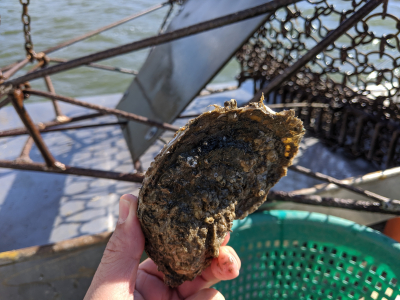
But the real work of oyster farming is “arduous, backbreaking work requiring a special dedication.” Avenal v. State, 886 So. 2d 1085, 1110 (La. 2004). It “takes a lot of labor effort,” is “pretty difficult work,” and oyster farmers “have to put in blood, sweat and toil to sometimes turn muddy water bottoms into an area that could be used for oyster cultivation.” Planting and harvesting the oysters means even more work. Knowing the effort that goes into delivering up oysters to consumers just makes us appreciate them all the more.

But the last time we reported on a takings case involving oysters, we had to conclude that the court did not like oysters that much. As property, that is. Yes

Continue Reading Citing Locke’s Labor Theory, CFC Finds “Property” In Oysters

Here’s a must-read from the Texas Court of Appeals (Second District).

In City of Grapevine v. Muns, No. 02-19-00257 (Dec. 23, 2021), 

Before 2018, the city’s 1982 zoning ordinance authorized “single-family detached dwellings” and didn’t say anything about short-term renting (short-term being defined as less than 30 days). The ordinance didn’t expressly authorize it, but it didn’t prohibit it either. The ordinance was one of those that say anything not expressly authorized is prohibited. Bed and breakfast operations were recognized in a 2000 amendment, but these operations require, among other things, that the owner live on-site.

But after the introduction of platforms such as AirBnB and VRBO, the short-term market “exploded” and the usual complaints from neighborhood residents followed. Slip op. at 6 (“criminal mischief, domestic disputes, parking violations, alarm calls, and noise disturbances”). Next came studies, public hearings, and the city’s assertion that it didn’t really need to

Continue Reading Tex App: “Property” Includes Right To Rent It Out – City’s Short-Term Ban May Be A Taking

Screenshot 2021-12-12 at 09-10-29 Event Registration

This Wednesday, December 15, 2021, at 1pm ET (10am PT) our PLF colleague Chris Kieser will be presenting an American Bar Association webinar, produced by the Real Property, Probate, and Trust Section, “Cedar Point Nursery v. Hassid: Supreme Court Weighs in on Definition of ‘Private Property’ and Implications for the Future.”

Register here. Here’s the details:

Chris Kieser, one of the attorneys representing Cedar Point Nursery in the recent Supreme Court case, will discuss the Court’s ruling as to what constitutes a physical taking of “Real Property” under the 5th Amendment and its potential applications in other contexts. He will be supported in the discussion by moderator, Nick Laurent, the chair of Land Use and Environmental Group – Condemnation Committee.

Chris is one of the lawyers representing the prevailing property owners in Cedar Point (our own look at the decision here), so he has a very

Continue Reading Wed, Dec. 15, 1pm ET: “Cedar Point Nursery v. Hassid: Supreme Court Weighs in on Definition of “Private Property” and Implications for the Future” ABA RPTE Webinar

PASH symposium

Back in February, we were honored to be part of the University of Hawaii Law Review’s symposium “25 Years of PASH,” a retrospective of one of the Hawaii Supreme Court’s most famous (or infamous) decisions, Pub. Access Shoreline Haw. v. Haw. Cnty. Plan. Comm’n, 79 Haw. 425, 903 P.2d 1246 (1993), cert. denied sub nom., Nansay Haw. v. Pub. Access Shoreline Haw., 517 U.S. 1163 (1996) (PASH).

At the conference, we spoke on the panel about “PASH and the Changing Coastal Environment” (see video here at the 2:02:25 mark if you want to watch our panel’s summations). The Law Review has now published the symposium, and here’s our contribution, Takings PASH and the Changing Coastal Environment, 43 U. Haw. L. Rev. 525 (2021).

For those of you not totally tuned in, in the PASH case the Hawaii Supreme Court

Continue Reading New Article: “Takings, PASH, and the Changing Coastal Environment,” 43 U. Haw. L. Rev. 525 (2021)

The latest in a case we’ve been following, and this one is a double nerd whammy. The cert petition in RLR Investments, LLC v. City of Pigeon Forge, No. 21-703 (Nov. 15, 2021), seeks review of a Sixth Circuit decision in a takings case where the issue on appeal is whether the Rooker-Feldman doctrine applies only to final decisions, or also covers interlocutory rulings by a district court.

Here’s the story: Pigeon Forge wanted RLR’s property. Next stop – condemnation. RLR objected to the taking, asserting the condemnation was not supported by a public use. The Tennessee trial court considering the condemnation suit disagreed, and concluded twice (once at the hearing on immediate possession, the other on a motion for summary judgment) that the taking was supported by a public use or purpose. 

Instead of proceeding to a valuation trial, the owner pressed its argument the taking lacked

Continue Reading New Cert Petition: Rooker-Feldman Does Not Apply To Interlocutory State Court Orders

Check it out: the “Digging a Hole” Podcast includes in one of its recent episodes a discussion of SCOTUS’s latest takings case, Cedar Point Nursery v. Hassid.

Our final guest for Season 3 is Nikolas Bowie, assistant professor of law at Harvard Law School and board member of the ACLU of Massachusetts, Lawyers for Civil Rights, the People’s Parity Project, and MassVote. In this episode, we dive into two of his recent articles — “Antidemocracy” and “The Constitutional Right of Self-Government.” We begin by discussing the Court’s recent ruling in Cedar Point Nursery v. Hassid (2021) and how it ties to Heart of Atlanta Motel, Inc. v. United States (1964). As part of this conversation, we touch on the implications of Cedar Point moving forward, whether the Court is operating as a democratic institution, and how our institutions can move toward isocracy, a system of government where citizens have

Continue Reading Digging A Hole Podcast Takes On Cedar Point Nursery…And Isocracy