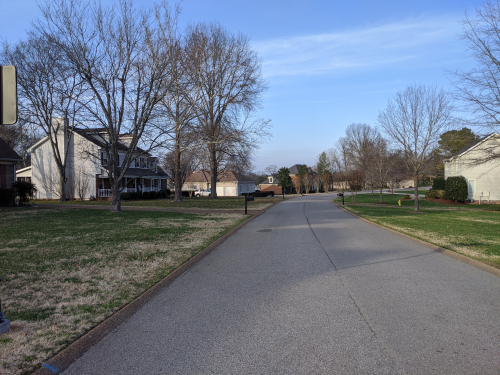
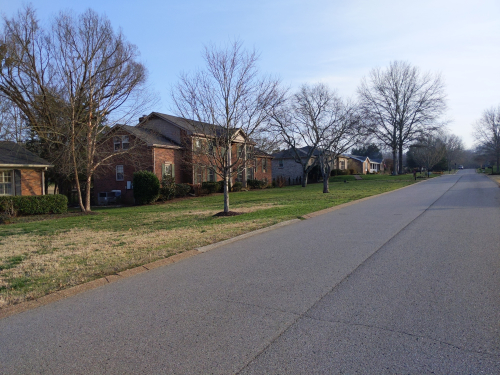
As we briefly noted in this post, before we departed the ALI-CLE Eminent Domain and Land Valuation Litigation Conference in Nashville, we just had to stop by the subdivision that was at issue in the Williamson County litigation. 

Frankly, there’s nothing especially special or noteworthy about this place, and only takings nerds will truly appreciate these pics. But given our propensity to make “takings pilgrimages” to the sites of famous property cases (see here (Claude Monet), here (Loretto), here (Chicago, B & Q RR), here (Dolan), here (Seneca Village), here (High Line), here (Hadacheck), and here (Nollan), for example), we just could not resist. 

So dig it, takings mavens. 
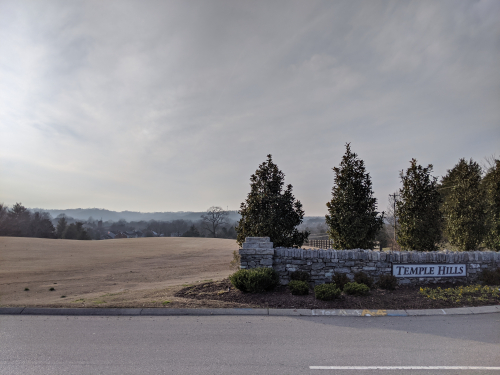
IMG_20200128_155300

There’s a golf course, of course. (There’s always a golf course.)
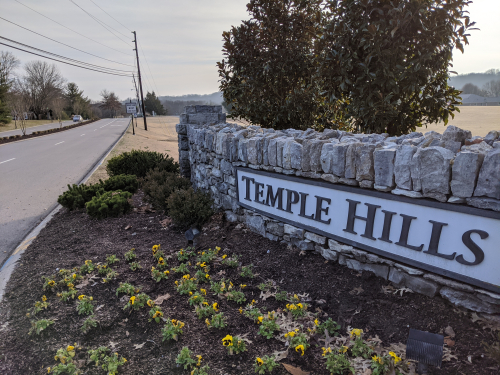
IMG_20200128_155147_1

“Temple Hills” beats “Glengarry Glen Ross”

PANO_20200128_154217.vr

A panorama of the main drag

IMG_20200128_154406

Up the street 

IMG_20200128_154302

Down the Continue Reading Williamson County, In Pictures

IMG_20200128_154634_1 STOP

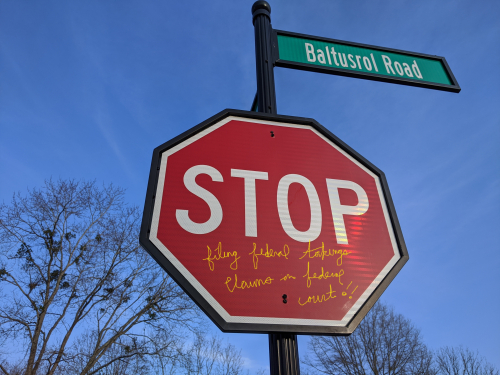
Having just wrapped the 2020 ALI-CLE Eminent Domain and Land Valuation Litigation Conference in Nashville (very successfully, but more on that later), we could not depart the area without paying a visit to the site of the late-and-not-so-great Williamson County case, in a nearby suburb (we’ll also have more on that later, once we’re back in the office). 

Driving into the infamous — at least in takings circles — Temple Hills subdivision, we came across this STOP sign at a key intersection, with some curious graffiti. Continue Reading Saw This Sign In Williamson County, Tennessee

Planet-of-the-apes-statue-of-liberty-blu-ray-disc-screencap-hd-1080p-05

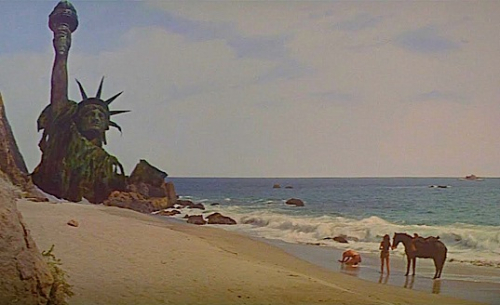
We gave up long ago expecting rationality and straight-up-the-middle narratives when it comes to cases about beaches and beach access. People get kind of nuts about that for some reason. We get why. Who doesn’t love a beach? Even a beach that could serve as the location if Planet of the Apes is re-made again. Don’t believe us? See this recent video. Or this story with a picture from the 1980s. 

But we overcame our usual reluctance to dive into these stories for the latest in a case we’ve been following, as it wound the way from California’s trial and appeals courts, to the U.S. Supreme Court on a (denied) judicial takings cert petition, to the California legislature which was threatening to condemn and buy the property, to a recent unreported California appellate decision affirming a finding of no public easement, and now this, a recently-filed complaint against

Continue Reading California Coastal Comm’n: We’re Suing Evil Rich Guy Who Is Blocking Access To The Forbidden Zone (Even Though Court Just Ruled The Other Way On The Same Issues In A Similar Case)

All seemed to be going well for the property owners in a Florida takings case. They obtained a satisfactory compensation judgment for the taking of their healthy citrus trees (yes, this is that case). And because Florida’s Constitution requires “full” compensation, they were also entitled to attorneys’ fees and costs. $13 million in compensation, nearly $1 million in fees. Took a while, but so far, so good.

That’s when the Florida Department of Agriculture really dug its heels in. It acknowledged it was obligated to pay compensation, but it simply refused to do so. It didn’t make a request to the legislature to appropriate money to satisfy the judgment, and claimed it has no obligation to do so. The legal equivalent of a middle finger at both the courts and Florida citizens:

Here, as discussed previously, the Department takes the position that it will make no payment of the

Continue Reading Florida Dep’t of Ag’s Middle Finger To The Courts And Property Owners: We Were Ordered To Pay Full Compensation…But We’re Not Going To

MonthlyArgumentCalNovember2019

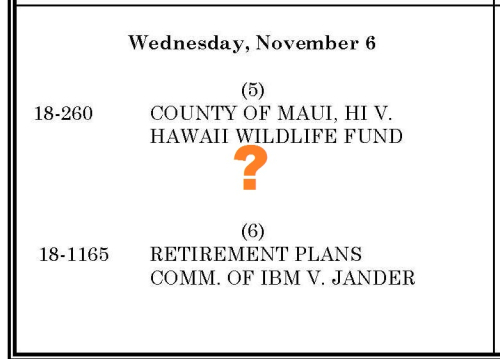
We’ve been following the ongoing efforts to settle the Clean Water Act case involving the County of Maui with some amusement. 

Why, you ask? Part of it is that we like municipal law. (Perhaps sad, but true.) But we’re amused mostly because the case’s current posture illustrates the dual principles of “be careful what you ask for,” and the legal corollary of one of Murphy’s Rule of Combat (“No plan ever survives first contact”): that you may be able to start a lawsuit on your own terms, but you may not always be able to end it the same way. 

The plan here seemed pretty good. Sue the County for violating the CWA for its injection wells, asserting it should have obtained a CWA permit. Yes, the line between a “point source” and a “nonpoint source” was not settled law, but the case seemed like a very good bet. The

Continue Reading Who Is In Charge At The County Of Maui? SCOTUS OA Hinges On Internal Dispute Over Who Can Settle

Here’s the Brief in Opposition in a case (and issue) we’ve been tracking for a while (including filing several amicus briefs along the way, including this one). The BIO is the pipeline’s response to the cert petition on the question of whether  

Brief in Opposition to Petition for Writ of Certiorari, Givens v. Mountain Valley Pipeline, LLC, No. 19-54…

Continue Reading BIO In Pipeline Quick-Take-By-Injunction Case: The Injunction Is Correct, And It Is Too Late To Do Anything About It Because We’re Already Building

IMG_20170810_183940
You know where this is. 

Here’s the cert petition filed recently in a case we’ve been tracking. (See also this guest post by economist Bill Wade about that case.)

As the above photo tells you, this one is going into what may the last truly unexplored frontier of regulatory takings law, the details of the ad hoc Penn Central test, the “default” test in most situations where the regulation does not wipe out all economically beneficial use (Lucas), doesn’t physically invade the property (Loretto, Kaiser Aetna), or doesn’t render useless a fundamental attribute of property (Webb’s Fabulous Pharmacies). 

In all but those situations, the Court has told us to apply the multifactor three-part (or as Professor Steve Eagle argues, the four-part) test from Penn Central. But only in a few cases have property owners successfully navigated that minefield to

Continue Reading Hic Sunt Dracones – New Cert Petition Argues Penn Central Results In “Inconsistent,” “Unprincipled,” “Amorphous,” “Illegitimate” Decisions

The Land Use Committee of the ABA’s Section of State and Local Government Law is sponsoring a free (for Section members) informal webinar about the latest in takings law:

Knick Picking Regulatory Takings: Did the Court Right a Wrong, or Wrong a Right?

Friday, July 26 | 2 – 2:30pm ET

Here’s hoping you can join us for a half hour on the 5-4 SCOTUS decision in Knick v. Township of Scott (June 21, 2019). Knick overruled the 34-year-old precedent in Williamson County requiring that federal takings claimants seek compensation in state court before being allowed to proceed in federal court.

Presenters Dwight Merriam and Robert Thomas will discuss reaction to the decision — which has been as divided as the Court. Was this the conservative justices having their way? Is it a right versus left issue? Did that baby, stare decisis, get thrown out with the old ripeness bathwater?

Continue Reading Upcoming Webinar – Knick Picking Regulatory Takings: Did the Court Right a Wrong, or Wrong a Right? (free for State and Local Govt Law Land Use Committee members)

34s75v

We’ve resisted for as long as we can.

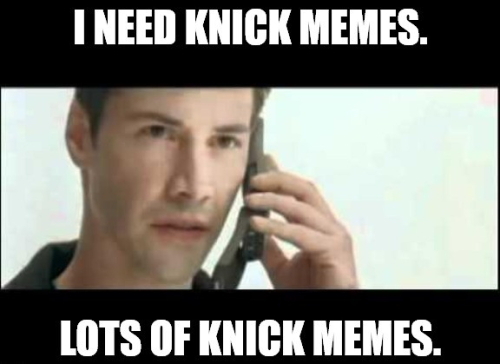
Here’s our take at telling the Williamson County and Knick story, 100% in memes.

Why, you may rightly ask? 

Well, it started with our Knick amicus brief, which included a meme that we thought captured well the injustice of property owners being prohibited by Williamson County from raising their federal constitutional claims in federal court (or anywhere, for that matter).

And then, as these things often do these days, the tail started wagging the dog. Readers didn’t want our cogent and deep analysis, they wanted more Knick memes. And rather than post those willy-nilly, we decided to do ’em all in a single post, and be done with it. 

So here you go. For those of you who dig this stuff, read on. If you think we missed any, or would like to send your own to fill

Continue Reading Knick, Entirely In Memes

20170918_171025_Richtone(HDR)

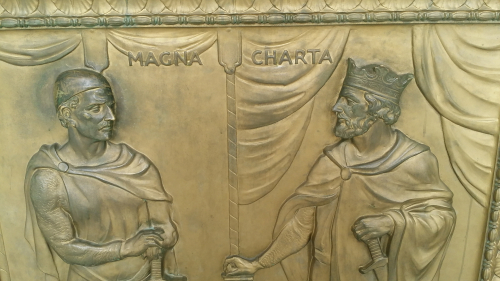
Yes, this is detail from the Supreme Court’s front door.

This is the first in what will be a short series of five posts with thoughts on the landmark decision in Knick. In this installment, a crash course in the extensive doctrinal background necessary to understand why the Knick Court did what it did. Here are the related posts:

* * * *

The opinions in last week’s ruling by a sharply-divided Supreme Court, Knick v. Township of Scott, No. 17-647 (June 21, 2019) employed a lot of very evocative language: “aborning,” “Catch-22,” “loot,” “shaky,” “sue me,” “overthrows,” “smashes,” “smithereens” “first crack,” “points for creativity.” But ultimately, the most important

Continue Reading Knick Analysis, Part I: After More Than 30 Years, Supreme Court Reopens The Federal Courthouse Door To Property Owners