


Here’s the first post-Murr cert petition (as far as we can tell), in a case we’ve been following. As we wrote in “The First Post-Murr Case? Fourth Circuit: No Taking Because Anti-Development Merger Regulations Actually Make Property Developable,” the Fourth Circuit concluded:

[T]he County’s regulations were run-of-the-mill zoning/land use ordinances, and thus were not a taking, nor violations of the related substantive due process and equal protection claims. Because the County had no obligation to extend sewer services to the plaintiff’s parcels, he had no property interest that was taken by the development prohibition. 

The court rejected the owner’s attempt to distinguish Murr. He pointed out that he purchased his property before the restrictive regulations were adopted, and not afterwards like the Murr children. See Murr, 137 S. Ct. at 1945 (“the “expectations . . . an acquirer of land must acknowledge legitimate restrictions affecting
Continue Reading First Post-Murr Cert Petition

What to make of this? A blog aimed at condemning authorities, with advice on how to avoid a claim for precondemnation damages. Okay, nothing wrong with that. Condemnors deserve good legal counsel as much as other parties. Indeed, having inexperienced counsel for the condemnor often makes resolving cases harder than it should be.

But check this out, a recent post entitled “Practice Tip to Avoid the Potential for Precondemnation Damages,” which notes (in its entirety):

This is a practice tip to avoid the potential for precondemnation damages.  In all project documents, refer to future land acquisitions in noncommittal, tentative, conditional language.

Examples:

  • “The proposed acquisition”
  • “The acquisition under staff consideration”
  • “The recommended acquisition”
  • “No decision has been made to acquire the property”
  • “Only the governing board can make the decision to acquire the property by eminent domain”

Project maps showing required acquisitions should be referred

Continue Reading Protip For Condemnors: For Planned Projects, Play Hide The Ball: “Project maps showing required acquisitions should be referred to as ‘studies,’” And “[b]oth in reality and in appearance, advise staff not to leave a paper trail”

Cover

Two items from land use guru Lawprof Daniel Mandelker:

  • A link to his resource web site, appropriately titled “Land Use Law.” It’s where we go to keep up with all of the land use and related (including takings) stuff.  Includes photos of the sites in key casess (like our “takings piligrimages“), the newest decisions and articles related to land use law, and links to other resources. Frequently updated. We’re adding it to our “Links” sidebar (scroll about halfway down our page on the right). Our suggestion: visit frequently. We’ve done so for a number of years, and you should also.
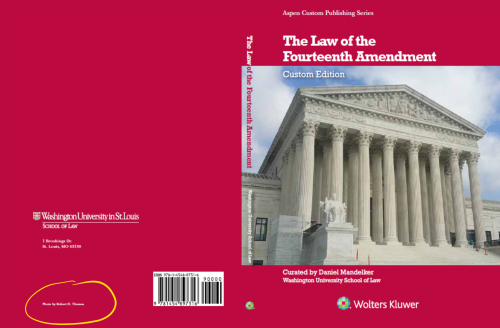
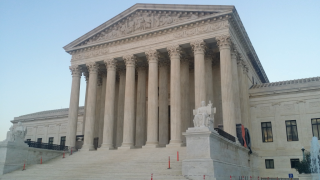
  • Also, Professor Mandelker just published the above book, “The Law of the Fourteenth Amendment.” And we must say that the cover has has the best photo of the U.S. Supreme Court building that we’ve ever seen. Absolutely the best! (All kidding aside, thanks


Continue Reading New Resource, New Book (The Law of the Fourteenth Amendment)

Back in October, the William and Mary Law School awarded U. Hawaii lawprof David Callies the Brigham-Kanner Prize at a two-day conference in Williamsburg. Our summary of the conference is posted here.

We spoke at the conference, at the first panel entitled “The Future of Land Regulation and a Tribute to David Callies,” along with Professors Shelly Saxer and Jim Ely, and past B-K Prize winner Michael Berger. Of course, Professor Callies also delivered his opening remarks.

The law school has posted the audio from that session, which you can listen to here, or stream it above (via Soundcloud). 

We’re in the process of transforming our remarks into a short essay, to be submitted to the Brigham-Kanner Property Conference Journal if you want to wait for the expanded version. (Feb. 13, 2018 update: here’s the draft article.)Continue Reading Brigham-Kanner Podcast: “The Future Of Land Regulations And A Tribute To David Callies”

Here’s a case about the denominator in a regulatory takings case from July 2017, just after the U.S. Supreme Court issued its opinion in Murr v. Wisconsin. We somehow missed the opinion when it was issued, but since we think it must be the first case which attempted to apply the Murr majority’s multi-factor test, figured we better post it.

In Quinn v. Board of County Commissioners, Queen Anne’s County, No. 16-1890 (July 7, 2017), a panel of the U.S. Court of Appeals for the Fourth Circuit upheld the district court’s dismissal of a regulatory takings claim that the County’s regulations, “designed to limit overdevelopment of the area” on South Kent Island. Slip op. at 3. But not as you might expect (on Williamson County ripeness grounds), but on the merits.

Practice note: when you are the property owner’s lawyer and an opinion starts by characterizing your

Continue Reading The First Post-Murr Case? Fourth Circuit: No Taking Because Anti-Development Merger Regulations Actually Make Property Developable

…this is might be it: Lampkins Crossing, LLC v. Williamson County, No. 3:17-cv-00906 (Nov. 14, 2017), in which the District Court dismissed substantive due process, procedural due process, and equal protection claims for not being ripe under Williamson County‘s “final decision” prong. The Williamson County case decided on Williamson County grounds.

Now, we’re just being cheeky with our title, of course, and this case may not present a good vehicle for addressing the most troubling prong of Williamson County (the “available state remedies” requirement in takings cases), but with the real County being the defendant here (and not the Williamson County Planning Commission), who could resist? Just think of the law review article titles, and the confusion in oral arguments about “Williamson County.”

Short story here is that the plaintiff’s claims against the County were not ripe in the court’s view, because the County still might

Continue Reading If There Ever Was A Perfect Case To Address Williamson County …

The Georgia Supreme Court’s analysis in Diversified Holdings, LLP v. City of Suwanee, No. S17A1140 (Nov. 2, 2017) reminded us of that old trope from logic, “no true Scotsman.” 

According to a completely reliable source (Wikipedia):

No true Scotsman is a kind of informal fallacy in which one attempts to protect a universal generalization from counterexamples by changing the definition in an ad hoc fashion to exclude the counterexample. Rather than denying the counterexample or rejecting the original claim, this fallacy modifies the subject of the assertion to exclude the specific case or others like it by rhetoric, without reference to any specific objective rule (“no true Scotsman would do such a thing”; i.e., those who perform that action are not part of our group and thus criticism of that action is not criticism of the group).

(And, in case you were wondering, “For the practice of

Continue Reading Georgia: No True Taking – Challenge To City’s Refusal To Rezone Isn’t Really Inverse Condemnation

20170918_190120
No soup for you!

Update: our colleague Bryan Wenter has his take on one of the cases denied review here (“U.S. Supreme Court Again Declines to Consider Important Property Rights Issue Regarding the Unconstitutional Conditions Doctrine“) (“Because the current composition of the U.S. Supreme Court leans ideologically conservative by any traditional measure and it takes only four of nine Justices to grant certiorari, on the surface it is surprising that the Court has yet to take up a case, such as CBIA or 616 Croft Ave., that would finally resolve this distinction between sweeping legislative takings and particularized administrative takings. The surprise is enhanced to a degree by the fact that the Court considered both cases in conference four times, which suggests a serious interest in the issue.”).

* * * *

To bring you up to speed on cases of interest in the Supreme Court’s cert pipeline

Continue Reading Cert Denied, Denied, Denied, Denied In Property Cases (But Don’t Give Up The Ship Just Yet)

We were all set to dive into the California Court of Appeal’s opinion (rendered in September, but only published yesterday) in Dryden Oaks, LLC v. San Diego County Regional Airport Authority, No. D069161 (Oct. 19, 2017), when our colleague Bryan Wenter beat us to the punch. 

So we won’t go into detail, and recommend instead you read his post at the Miller Starr Regalia Land Use Developments blog, “Court Rejects Regulatory Takings and Pre-Condemnation Misconduct Claims Based on Airport Land Use Commission’s Reclassification of Property Within Different Safety Zone.”

As Bryan writes:

In short, in 2002 the City approved permits for both lots despite determinations the San Diego County Regional Airport Authority’s determination the projects were incompatible with the airport. The developer completed construction of a commercial building on one of the lots in 2005, but the second permit expired in 2012 without commencement of any

Continue Reading Cal App: Airport Didn’t Take Property By Adopting A Safety Plan That Prohibited Nearby Building (But Maybe The City Did)

The complete agenda and faculty list has now been posted on the ALI-CLE website, and early registration is open! Go now and reserve your spot. 

We paid a visit to Charleston recently, the venue for our January 2018 conference, to scout it out. We can report that we’re going to have a great time, for sure. When we polled you last year, you selected Charleston as your first choice (a new city for the Conference), and it is shaping up to be a very good selection. In addition to the usual lineup of CLE programming, there are a ton of things to see and do in the area. We recorded a short video down at the “four corners of law” (the intersection of Meeting Street and Broad Street), to give you a preview (the weather was much better than in our 2016 preview video, too).

As an added

Continue Reading 2018 ALI-CLE Eminent Domain Conference – Agenda And Faculty Now Posted